
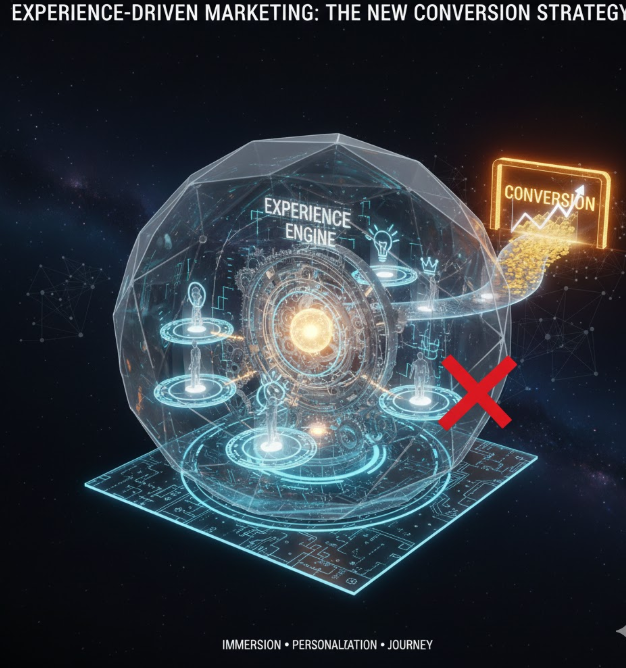
In today’s fast-moving digital landscape, consumers are no longer impressed by flashy advertisements or loud promotional banners. They want something deeper — they want to feel something. That is exactly why experience-driven marketing has rapidly emerged as the most powerful conversion strategy of the modern era. Brands that understand this shift are not just selling products; they are creating memories, building relationships, and turning first-time visitors into loyal customers. Whether you are a startup owner, a seasoned marketer, or someone currently enrolled in the best SEO course in Dwarka Mor or studying at a social media marketing institute in Vikas Puri, understanding experience-driven marketing is not optional anymore — it is essential.
What Is Experience-Driven Marketing?
Experience-driven marketing, also known as experiential marketing, is a strategy that focuses on engaging customers through immersive, interactive, and emotionally resonant experiences rather than traditional one-way communication. Instead of telling customers why your product is great, you show them — you let them live it. This approach shifts the entire marketing conversation from “what we sell” to “how you feel when you interact with us.” It encompasses everything from live brand activations and pop-up events to personalized digital journeys, interactive content, and community-building initiatives.
The key difference between traditional marketing and experience-driven marketing lies in the relationship it creates. Traditional marketing broadcasts a message. Experience-driven marketing starts a conversation. And in 2025, conversations are what convert.
Why Experiences Drive Conversions
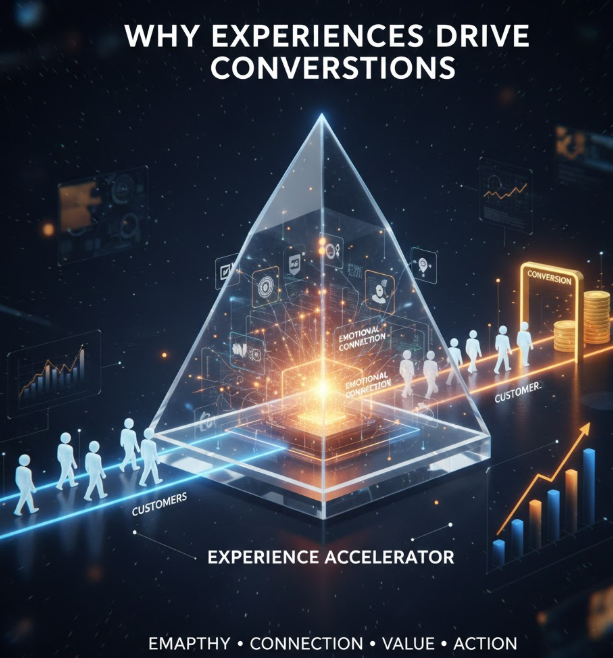
The psychology behind this strategy is rooted in human emotion. Studies have consistently shown that people make purchasing decisions based on how they feel, and they justify those decisions with logic afterward. When a brand successfully delivers a meaningful experience — whether online or offline — it triggers positive emotions like excitement, trust, belonging, and joy. These emotions are directly tied to conversion.
Consider how brands like Apple, Nike, and Zomato have built empires not just on great products, but on powerful brand experiences. Their customers don’t just buy; they advocate, share, and return. That level of loyalty is the ultimate conversion metric, and it begins with the experience. This is also why learning platforms like social media marketing institutes in Vikas Puri are now incorporating experiential marketing modules into their digital marketing courses — because the demand for this skill is booming in agencies and brands alike.
The Pillars of Experience-Driven Marketing
At its core, experience-driven marketing rests on four key pillars: personalization, storytelling, interactivity, and community. Together, these elements create a customer journey that feels human, relevant, and memorable.
Personalization is the foundation. In a world where consumers are bombarded with generic content, a personalized experience cuts through the noise instantly. Whether it is a customized email sequence, a product recommendation engine, or a geographically relevant campaign, personalization communicates one powerful message: “We see you.” Brands investing in data-driven personalization are seeing significantly higher engagement rates and reduced bounce rates — both of which are critical SEO and conversion signals. If you are studying at the best SEO course in Dwarka Mor, you will know that user engagement directly impacts your search rankings, and a personalized experience is one of the most effective ways to boost it.
Storytelling is what makes experiences stick. Human brains are wired for narrative. A compelling brand story creates an emotional bridge between your product and your audience. Instead of listing features, story-driven marketing places the customer as the hero of a journey — one in which your brand is the guide. This approach dramatically increases the time users spend with your content, which signals to search engines like Google that your content is valuable, further boosting your organic rankings.
Interactivity transforms passive viewers into active participants. Interactive quizzes, polls, live Q&A sessions, virtual try-ons, and user-generated content campaigns all invite the audience to engage rather than just consume. Platforms like Instagram, YouTube, and LinkedIn reward interactive content with greater reach, making it a smart strategy for anyone learning media marketing in Vikas Puri to master. The more a user interacts with your brand, the higher the chances of conversion — it is that simple.social
Community is the most powerful long-term conversion engine. When a brand successfully builds a community — whether through WhatsApp groups, Discord servers, Facebook communities, or offline events — it creates an ecosystem of trust. Community members refer new customers, defend the brand in public spaces, and buy more frequently. Community is what turns a marketing campaign into a movement.
Experience-Driven Marketing in the Digital Space
While many people associate experiential marketing with offline events, its most scalable and trackable form exists entirely online. Digital experience-driven marketing includes immersive website design, conversational chatbots, interactive landing pages, AR filters on social media, personalized retargeting campaigns, and gamified loyalty programs. Each of these touchpoints is an opportunity to create a micro-experience that nudges the user one step closer to conversion.
From an SEO perspective, experience-driven digital strategies are gold. Google’s Core Web Vitals and its overall emphasis on user experience (UX) mean that a website designed with the visitor’s experience in mind will naturally rank higher. Pages that load fast, feel intuitive, and deliver exactly what the user is looking for perform far better in search. If you are attending the best SEO course in Dwarka Mor, you will recognize how the concept of experience aligns perfectly with Google’s E-E-A-T framework — Experience, Expertise, Authoritativeness, and Trustworthiness. A brand that creates genuine experiences demonstrates all four.
How to Implement Experience-Driven Marketing for Conversions
To start applying this strategy, you need to first map your customer journey in detail. Understand every touchpoint — from the first Google search to the final purchase confirmation — and identify where the experience feels cold, transactional, or disengaging. Those are your biggest opportunities for improvement.
Next, invest in high-quality content that serves an experience rather than just information. Video storytelling, behind-the-scenes content, founder stories, and customer success journeys all perform exceptionally well. Pair this with interactive elements — a quiz to help users find the right product, a calculator to show ROI, or a short survey that personalizes their experience on your website. These elements increase session duration, reduce bounce rate, and signal to search engines that your content matters.
For social media, experiment with live sessions, polls, challenges, and collaborative content. At any reputed social media marketing institute in Vikas Puri, you will learn that social platforms reward authenticity and interaction above polish and perfection. Real conversations, honest reviews, and raw behind-the-scenes moments generate more trust — and more conversions — than the most expensive produced ad.
Do not underestimate the power of offline experiences either. Even if your business is primarily digital, hosting a local workshop, a webinar, or a pop-up event can dramatically increase brand affinity and word-of-mouth referrals. Combining offline intimacy with online amplification creates a flywheel that drives sustainable growth.
Measuring the Impact of Experience-Driven Marketing
One of the most common concerns marketers have is: “How do I measure an experience?” The answer lies in tracking the right metrics. Beyond clicks and impressions, focus on engagement rate, time-on-site, return visit rate, Net Promoter Score (NPS), customer lifetime value (CLV), and referral traffic. These indicators tell you whether your audience is genuinely connecting with your brand or simply passing through.
Tools like Google Analytics 4, Hotjar, and social media insights dashboards give you a complete picture of how users are experiencing your brand online. If your experience-driven strategy is working, you will notice a consistent improvement in these metrics over time — along with lower customer acquisition costs, because loyal, engaged audiences do a significant portion of your marketing for you.
The Future Belongs to Experience-First Brands
As artificial intelligence, augmented reality, and hyper-personalization technologies continue to evolve, the brands that will dominate the next decade are those who invest in experiences today. The consumer of 2025 and beyond is savvy, values-driven, and deeply skeptical of traditional advertising. They trust recommendations from communities, stories from real people, and brands that make them feel understood.
If you are building a career in digital marketing — perhaps through the best SEO course in Dwarka Mor to master search engine optimization, or at a leading social media marketing institute in Vikas Puri to command the power of social platforms — experience-driven marketing should be at the center of your learning. It is not just a trend; it is the new standard of excellence.
The brands that lead in this era will not be the loudest. They will be the most memorable. And memories are made through experiences. Start building yours today.