
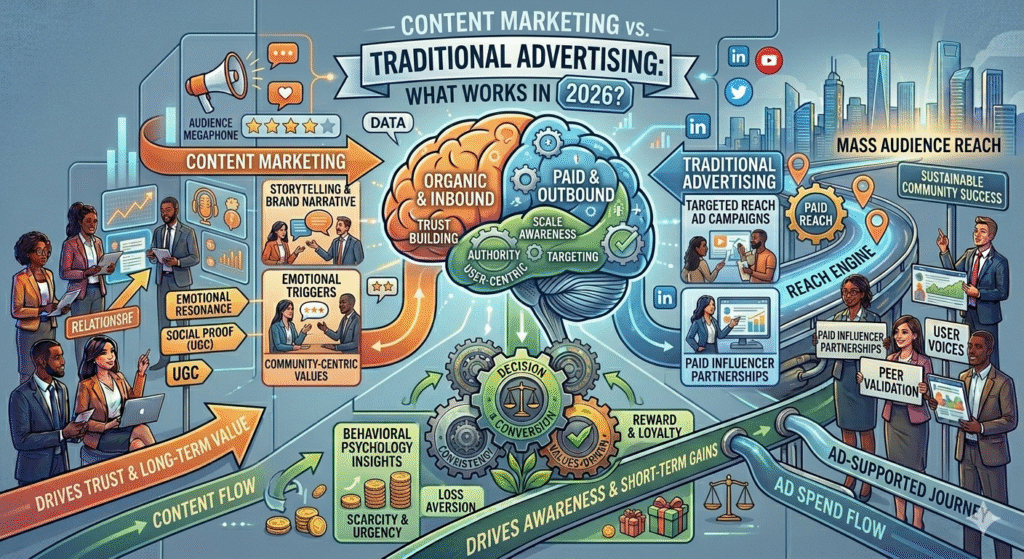
Marketing has always evolved with technology, but the shift we are witnessing now is more significant than ever before. Businesses are no longer relying only on television ads, billboards, or print media to reach their audience. Instead, they are investing heavily in digital channels, storytelling, and long-term engagement. This shift has brought a major debate into focus: content marketing vs traditional advertising, and more importantly, which one works better in 2026.
At its core, the difference lies in how brands communicate. Traditional advertising interrupts the audience with promotional messages, while content marketing strategy focuses on attracting and engaging users by providing value. In the context of a modern digital marketing strategy, this difference is shaping how businesses allocate their budgets and measure success.
For students and professionals pursuing a digital marketing course in Delhi, understanding this shift is essential, because it reflects how real-world marketing is evolving.
Traditional Advertising: Reach and Immediate Visibility
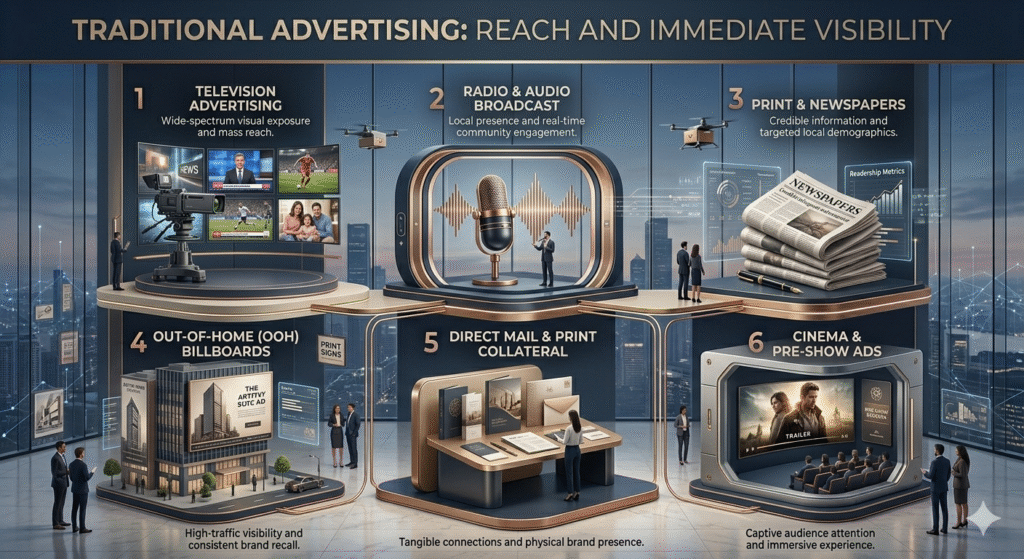
Traditional advertising has been the backbone of marketing for decades. Channels like television, radio, newspapers, and outdoor billboards have helped brands reach large audiences quickly. Even today, these methods remain effective for mass awareness, especially for large-scale campaigns.
The strength of traditional advertising lies in its ability to deliver immediate visibility. A well-placed billboard or a prime-time television ad can expose a brand to thousands or even millions of people within a short time. This makes it particularly useful for brand launches, product announcements, and large campaigns where reach is the primary goal.
However, traditional advertising also has limitations. It is often expensive, difficult to measure accurately, and lacks precise targeting. Unlike digital platforms, it does not allow marketers to track user behavior or optimize campaigns in real time. This is where modern approaches like SEO in digital marketing and data-driven campaigns offer a clear advantage.
Content Marketing: Building Value and Trust Over Time
Content marketing represents a completely different approach. Instead of pushing messages, it focuses on pulling audiences in by offering useful, informative, or entertaining content. This could include blogs, videos, social media posts, podcasts, and more.
A strong content marketing strategy is built around understanding the audience and consistently delivering value. Over time, this builds trust, authority, and long-term relationships with customers.
One of the biggest advantages of content marketing is its alignment with SEO in digital marketing. High-quality content helps websites rank on search engines, bringing in organic traffic without continuous spending. This makes it a cost-effective and sustainable approach in the long run.
For students learning through a digital marketing course in Delhi, content marketing is often emphasized because it combines creativity with strategy and delivers measurable results.
The Core Difference: Interruption vs Attraction
The fundamental difference in the content marketing vs traditional advertising debate lies in how audiences interact with each approach.
Traditional advertising interrupts the user experience. Whether it is a TV commercial or a banner ad, it demands attention. While this can be effective for awareness, it can also lead to ad fatigue if overused.
Content marketing, on the other hand, attracts users naturally. It provides information, solves problems, or entertains, making the audience willingly engage with the brand. This creates a more positive and lasting impression.
In a modern digital marketing strategy, this shift from interruption to attraction is becoming increasingly important as consumers gain more control over what they choose to watch and engage with.
Budget Allocation: Where Should Businesses Invest?
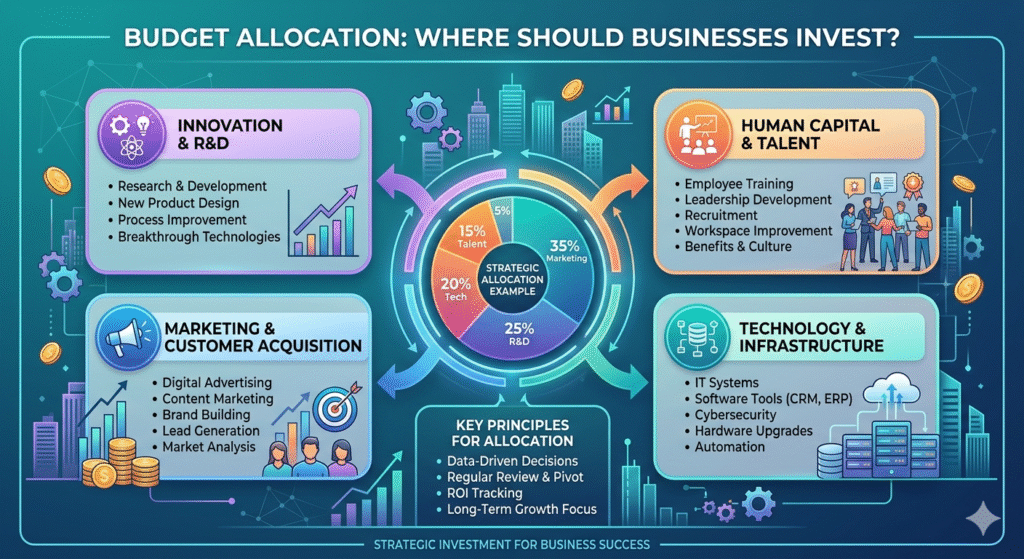
One of the biggest concerns for businesses is how to allocate their budget effectively. The answer depends on goals, timelines, and resources.
Traditional advertising requires a significant upfront investment and is best suited for brands that want immediate visibility at scale. However, its lack of precise targeting and measurement can reduce efficiency.
Content marketing, while slower to show results, offers long-term value. A well-written blog or a high-performing video can continue generating traffic and leads long after it is published. This makes it a strong investment for sustainable growth.
Most modern businesses are now shifting toward a balanced approach, where content marketing forms the foundation and other channels are used to amplify reach.
The Role of AI in Modern Marketing
As we move further into the future of digital marketing, technology is playing a major role in shaping both content marketing and advertising. AI in digital marketing is helping brands analyze audience behavior, generate content ideas, and optimize campaigns more efficiently.
While traditional advertising is also evolving with digital integration, content marketing benefits more directly from AI-driven insights. This allows marketers to create more personalized and relevant content, improving engagement and performance.
For professionals, especially those pursuing a digital marketing course in Delhi, understanding how to use AI alongside content strategies is becoming a key skill.
What Works in 2026?
The answer to content marketing vs traditional advertising is not about choosing one over the other—it is about understanding which works better in a given context.
In 2026, content marketing is clearly leading the way in terms of engagement, trust, and long-term ROI. However, traditional advertising still holds value for large-scale awareness and brand positioning.
The most successful businesses are those that combine both approaches strategically, using content to build relationships and advertising to amplify reach.
Conclusion
The marketing landscape in 2026 is defined by a shift toward value-driven communication. The debate around content marketing vs traditional advertising highlights how consumer expectations have changed and how businesses must adapt.
Content marketing offers sustainability, trust, and long-term growth, while traditional advertising provides reach and immediate visibility. Both have their place, but the balance between them depends on the goals and strategy of the business.
For students and professionals, especially those learning through a digital marketing course in Delhi, understanding this balance is essential. Because in the modern world, success is not just about reaching more people—it is about creating meaningful connections that last.