
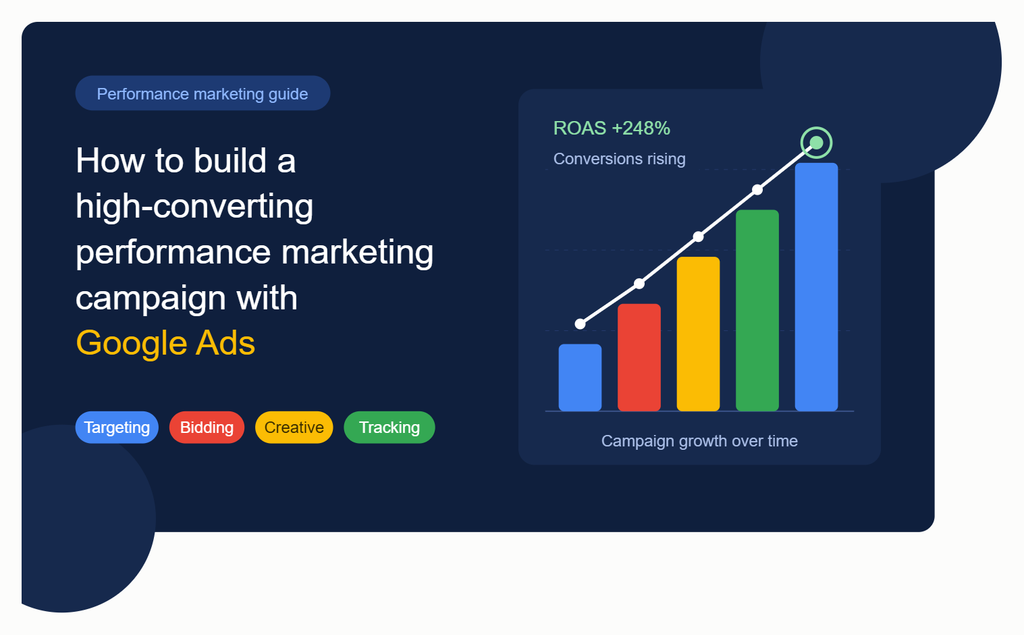
Google Ads is one of the most powerful platforms for businesses that want fast and measurable results. But simply running ads is not enough. Many businesses spend money without getting quality leads or sales because they don’t have the right strategy.
A successful performance marketing campaign is built on planning, audience research, compelling ad copy, and continuous optimization. Every click should have a purpose, and every campaign should move you closer to your business goals.
Whether you own a small business, an online store, or work for a client, this guide will show you how to create a Google Ads campaign that delivers better conversions and higher returns.
What Is Performance Marketing?
Performance marketing is a digital marketing approach where businesses pay based on measurable actions like clicks, leads, purchases, or app installs. Instead of focusing only on impressions, the goal is to achieve real business results.
Google Ads is one of the best platforms for performance marketing because it allows you to target people who are actively searching for your products or services.
Why Google Ads Works So Well
Google processes billions of searches every day. When someone searches for a product or service, they already have an intention to buy or learn more. This makes Google Ads highly effective for reaching the right audience at the right time.
Some major benefits include:
- Instant visibility on Google Search
- Highly targeted audience selection
- Flexible budget options
- Detailed performance tracking
- Better return on investment with proper optimization
Step 1: Define a Clear Campaign Goal
Before creating your campaign, decide what success looks like.
Ask yourself:
- Do you want more website traffic?
- Do you want leads?
- Do you want online sales?
- Do you want phone calls?
- Do you want app downloads?
A clear objective helps Google optimize your campaign more effectively.

Step 2: Research the Right Keywords
Keywords decide when your ads appear.
Instead of targeting broad keywords, choose terms that match your customer’s search intent.
For example:
- Google Ads management
- PPC services
- Online advertising agency
- Digital marketing services
- Best Google Ads expert
Mix different keyword types:
- Broad Match
- Phrase Match
- Exact Match
Also, don’t forget negative keywords. They prevent your ads from showing for irrelevant searches and help save your advertising budget.
Step 3: Understand Your Target Audience
Even the best ad will fail if it reaches the wrong audience.
Study your ideal customer carefully.
Consider:
- Age
- Gender
- Location
- Interests
- Buying behavior
- Devices they use
The more specific your audience, the better your conversion rate.
Step 4: Write Ads That People Want to Click
Your ad should solve a problem quickly.
A strong Google ad usually includes:
- An attention-grabbing headline
- A clear benefit
- Trust-building information
- A strong Call-to-Action
Example:
Headline:
Get More Leads with Google Ads
Description:
Increase your sales with expert campaign management. Start today and grow your business faster.
Avoid stuffing too many keywords. Write naturally and focus on helping the user.
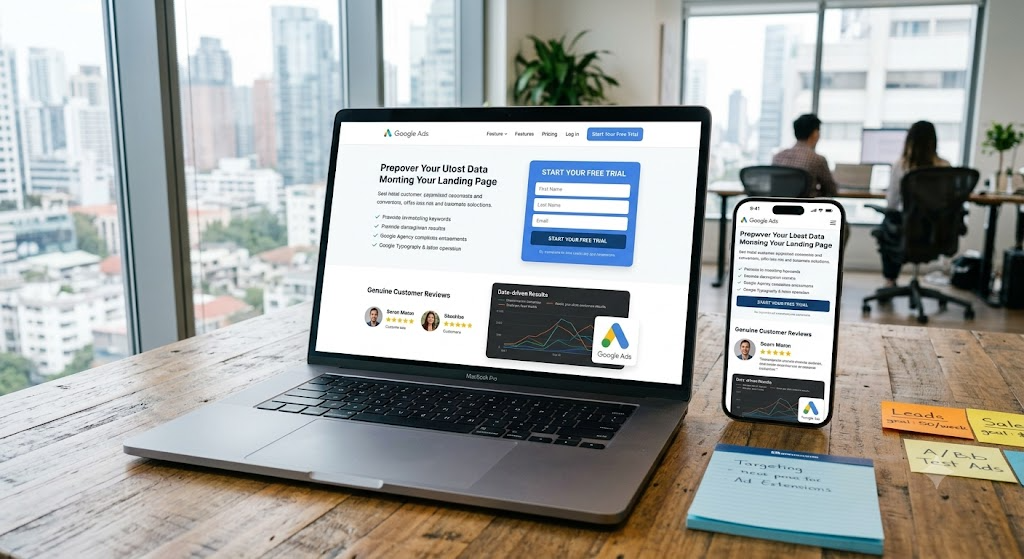
Step 5: Build a Landing Page That Converts
Many businesses lose customers because they send visitors to a poor landing page.
Your landing page should have:
- Clear headline
- Fast loading speed
- Mobile-friendly design
- Easy contact form
- Customer testimonials
- Strong CTA button
Remember, clicks do not generate revenue. Conversions do.
Step 6: Set Up Conversion Tracking
Without tracking, you cannot improve your campaign.
Track important actions like:
- Form submissions
- Purchases
- Phone calls
- Newsletter sign-ups
- Add to cart events
Google Ads conversion tracking helps you understand which keywords and ads are generating actual business results.
Step 7: Optimize Your Campaign Regularly
Successful advertisers never leave campaigns running without checking them.
Review your campaign every week.
Look at:
- Click Through Rate (CTR)
- Cost Per Click (CPC)
- Conversion Rate
- Cost Per Conversion
- Quality Score
- Search Terms Report
Pause underperforming keywords and invest more in campaigns that generate profitable results.
Step 8: Test Different Ad Variations
Never rely on a single advertisement.
Create multiple versions of your:
- Headlines
- Descriptions
- Call-to-Action
- Landing pages
Small improvements can significantly increase your conversion rate over time.
Step 9: Use Smart Bidding Strategies
Google’s AI-powered bidding strategies can improve campaign performance.
Popular options include:
- Maximize Conversions
- Target CPA
- Target ROAS
- Maximize Clicks
Choose the bidding strategy that matches your campaign objective.
Should You Hire a Performance Marketing Agency?
Managing Google Ads requires continuous monitoring, keyword optimization, bid adjustments, audience testing, and performance analysis. If you don’t have the time or experience, working with a professional performance marketing agency can save both time and money.
A good agency understands campaign optimization, conversion tracking, audience targeting, and budget management. Instead of guessing what works, they rely on data to improve results and maximize your return on investment.

Common Mistakes to Avoid
Many advertisers waste their budget because of simple mistakes.
Avoid these common errors:
- Targeting very broad keywords
- Ignoring negative keywords
- Sending traffic to a weak landing page
- Not tracking conversions
- Stopping campaigns too early
- Using only one ad variation
- Ignoring mobile users
Fixing these mistakes can dramatically improve campaign performance.
Conclusion
Running a successful Google Ads campaign is not about spending more money. It is about making smarter decisions. Every part of your campaign, from keyword selection to landing page design, plays an important role in driving conversions.
A strong performance marketing strategy focuses on measurable results, continuous testing, and ongoing improvements. Whether you manage campaigns yourself or work with a trusted performance marketing agency, success comes from understanding your audience, tracking performance, and optimizing regularly.
Start with clear goals, learn from your campaign data, and keep improving. Over time, your Google Ads campaigns can become a reliable source of leads, sales, and long-term business growth.
Frequently Asked Questions (FAQs)
1. What is performance marketing in Google Ads?
Performance marketing is a digital marketing strategy where businesses pay for measurable actions such as clicks, leads, or sales. Google Ads is one of the most effective platforms for achieving these results.
2. How much budget should I start with for Google Ads?
There is no fixed amount. Many small businesses begin with a daily budget of ₹500 to ₹2,000 and increase it based on campaign performance and return on investment.
3. How long does it take for a Google Ads campaign to show results?
You may start getting clicks within hours, but meaningful optimization usually takes 2 to 4 weeks as enough data is collected to improve performance.
4. Why is conversion tracking important in Google Ads?
Conversion tracking helps you measure valuable actions like purchases, leads, or phone calls. It allows you to identify what is working and improve your campaigns based on real data.
5. Should I manage Google Ads myself or hire a performance marketing agency?
If you have experience and time, you can manage campaigns yourself. However, businesses with larger budgets or competitive industries often benefit from hiring a performance marketing agency to improve efficiency, reduce wasted ad spend, and increase conversions.