
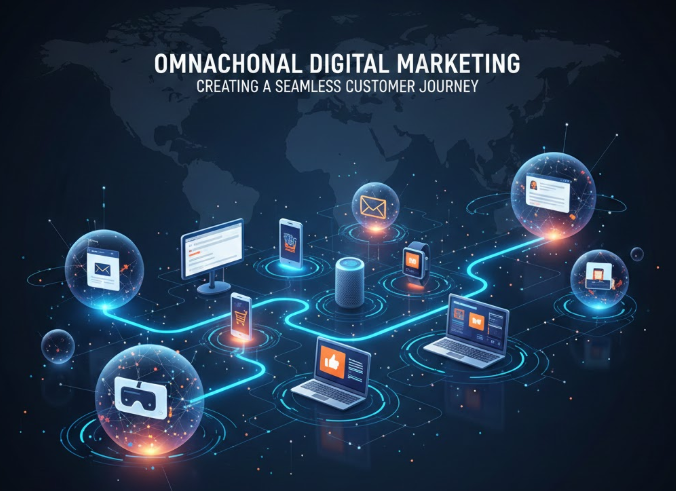
In today’s hyperconnected world, customers interact with brands across multiple touchpoints—from social media platforms and email campaigns to physical stores and mobile apps. The key to success lies in creating a cohesive experience that seamlessly guides customers through their journey, regardless of where they engage with your brand. This is where omnichannel digital marketing becomes not just advantageous, but essential.
Understanding Omnichannel Digital Marketing
Omnichannel digital marketing is a customer-centric approach that integrates all marketing channels to deliver a consistent, personalized experience across every touchpoint. Unlike multichannel marketing, which simply uses multiple channels independently, omnichannel marketing ensures these channels work together harmoniously, creating a unified brand experience that follows customers wherever they go.
The modern consumer doesn’t think in channels—they think in terms of their needs and convenience. They might discover a product on Instagram, research it on your website, read reviews on Google, and finally make a purchase in-store or through a mobile app. An effective omnichannel strategy ensures that each step of this journey feels connected and intentional.
The Importance of a Seamless Customer Journey
Creating a seamless customer journey isn’t just about convenience; it’s about building lasting relationships with your audience. When customers experience friction—inconsistent messaging, lost cart items when switching devices, or disconnected customer service—they’re likely to abandon your brand for competitors who offer smoother experiences.
If you’re looking to build expertise in this area, enrolling in a diploma in digital marketing can provide you with comprehensive knowledge of integrated marketing strategies. Many professionals seeking career advancement are now pursuing a digital marketing course after 12th to gain early expertise in this rapidly evolving field.
Key Components of Omnichannel Digital Marketing
1. Customer Data Integration
The foundation of any successful omnichannel strategy is comprehensive customer data. By collecting and analyzing data from all touchpoints—website analytics, social media interactions, email engagement, purchase history, and customer service interactions—you can create detailed customer profiles that inform personalized experiences.
Advanced Customer Relationship Management (CRM) systems and marketing automation platforms enable you to track customer behavior across channels and use this information to deliver relevant content at the right time. This level of personalization transforms casual browsers into loyal customers.
2. Consistent Brand Messaging
Your brand voice, visual identity, and core messaging should remain consistent across all channels while being optimized for each platform’s unique characteristics. Whether a customer encounters your brand on LinkedIn, receives an email newsletter, or visits your physical location, they should immediately recognize your brand and receive coherent messaging.
This consistency builds trust and reinforces brand recognition. Learning how to maintain this consistency across diverse platforms is a core component of social media marketing education, which forms an essential part of any comprehensive digital marketing training program.
3. Mobile-First Approach
With mobile devices accounting for more than half of all web traffic globally, a mobile-first approach is no longer optional. Your omnichannel strategy must prioritize mobile experiences, ensuring that websites are responsive, apps are user-friendly, and mobile payment options are seamless.
Mobile also serves as a bridge between online and offline experiences. Features like mobile coupons, location-based notifications, and in-store pickup options for online purchases exemplify how mobile enhances the omnichannel experience.
4. Cross-Channel Attribution
Understanding which touchpoints contribute to conversions is crucial for optimizing your marketing spend. Cross-channel attribution models help you identify how different channels work together to drive customer actions, moving beyond the limitations of last-click attribution.
This analytical approach requires sophisticated tracking and data analysis skills, which are thoroughly covered in a quality digital marketing training center that emphasizes practical, results-driven learning.
Building Your Omnichannel Strategy: A Step-by-Step Approach
Step 1: Map the Customer Journey
Begin by understanding your customers’ actual paths to purchase. Create detailed customer journey maps that identify all potential touchpoints, pain points, and opportunities for engagement. Consider different customer segments and their unique journeys, as a B2B customer’s path will differ significantly from a B2C customer’s.
Use surveys, interviews, and analytics data to validate your assumptions. The goal is to see your brand through your customers’ eyes and understand their needs at each stage of their journey.
Step 2: Identify and Audit Your Channels
Catalog all the channels where your brand has a presence—website, social media platforms, email, mobile apps, physical stores, customer service lines, and any other touchpoints. Assess the current performance and consistency of each channel.
Look for gaps where channels operate in silos, inconsistencies in messaging or branding, and opportunities to create connections between channels. This audit reveals where your omnichannel strategy needs the most work.
Step 3: Implement Integration Technologies
Invest in technology that enables channel integration. This might include a robust CRM system, marketing automation platform, unified analytics solution, and tools that enable personalization at scale. Cloud-based solutions often provide the flexibility and scalability needed for effective omnichannel marketing.
Many professionals find that hands-on training with these tools—available through a digital marketing course with placement near me—accelerates their ability to implement effective strategies in real-world scenarios.
Step 4: Create Unified Customer Profiles
Develop a single customer view by integrating data from all channels. These unified profiles should include demographic information, behavioral data, purchase history, communication preferences, and engagement patterns across all touchpoints.
This comprehensive view enables you to deliver personalized experiences that acknowledge previous interactions, regardless of channel. When a customer who abandoned a cart online receives a helpful email or when a loyalty program seamlessly works both online and in-store, you’re seeing unified customer profiles in action.
Step 5: Design Channel-Specific Content with Consistent Themes
While your core message remains consistent, optimize content for each channel’s unique characteristics and audience expectations. Instagram content should be visually compelling and concise, while blog posts can be more detailed and informative. Email campaigns might focus on exclusive offers, while social media emphasizes community engagement.
The skill of adapting content while maintaining brand consistency is something professionals learn through comprehensive training at the best institute to learn digital marketing, where both strategic thinking and practical execution are emphasized.
Step 6: Test, Measure, and Optimize
Continuously monitor performance metrics across all channels, looking at both individual channel performance and how channels work together. Key metrics might include customer lifetime value, cross-channel conversion rates, customer satisfaction scores, and return on marketing investment.
Use A/B testing to refine your approach, experimenting with different messages, timing, and channel combinations. Omnichannel marketing is iterative—what works today may need adjustment tomorrow as customer behaviors and technologies evolve.
Real-World Omnichannel Success Stories
Leading brands have demonstrated the power of omnichannel marketing through innovative strategies. Retailers like Disney create seamless experiences where guests can plan trips online, use mobile apps for real-time navigation and wait times, and connect digital photos to their accounts automatically. Banks enable customers to start applications online, continue them on mobile devices, and complete them in branches with all information preserved.
These examples show that successful omnichannel marketing isn’t about being present on every channel—it’s about connecting the right channels in meaningful ways that serve customer needs.
Common Omnichannel Marketing Challenges and Solutions
Challenge 1: Data Silos Many organizations struggle with disconnected systems that don’t share data effectively. Solution: Invest in integration middleware or platforms specifically designed to unify disparate data sources.
Challenge 2: Organizational Silos When different teams manage different channels without coordination, inconsistency inevitably results. Solution: Create cross-functional teams and shared KPIs that encourage collaboration.
Challenge 3: Technology Limitations Legacy systems may not support the integration needed for true omnichannel experiences. Solution: Gradually modernize your technology stack, starting with the most critical integration points.
Challenge 4: Skill Gaps Omnichannel marketing requires a diverse skill set that many teams lack. Solution: Invest in training through programs at the best institute for digital marketing near me, where comprehensive curricula cover both strategic and technical aspects.
The Future of Omnichannel Marketing
As technology continues to evolve, omnichannel marketing will become even more sophisticated. Artificial intelligence and machine learning will enable real-time personalization at scale, predicting customer needs before they’re expressed. Voice-activated devices, augmented reality, and Internet of Things (IoT) connections will create new touchpoints that must be integrated into the omnichannel ecosystem.
The lines between online and offline experiences will continue to blur, with technologies like virtual fitting rooms, interactive displays, and seamless checkout experiences transforming physical retail spaces into connected touchpoints within the digital ecosystem.
Building Your Omnichannel Marketing Career
For those looking to specialize in this growing field, comprehensive education is essential. Whether you’re considering digital marketing Dwarka institutes or exploring options elsewhere, look for programs that offer:
- Hands-on experience with integration technologies and analytics platforms
- Real-world case studies and project work
- Coverage of both strategic planning and tactical execution
- Exposure to the latest tools and trends in omnichannel marketing
- Strong placement support to help launch your career
A quality diploma in digital marketing should prepare you not just to understand omnichannel concepts, but to implement them effectively in diverse business contexts. The best institute for digital marketing near me will be one that combines theoretical knowledge with practical skills, taught by instructors with real-world experience.
Conclusion
Omnichannel digital marketing represents the evolution of customer engagement in our interconnected world. By creating seamless experiences across all touchpoints, brands can build stronger relationships, increase customer loyalty, and drive sustainable business growth.
Success in omnichannel marketing requires the right combination of strategy, technology, and execution skills. Whether you’re a business looking to transform your customer experience or a professional seeking to advance your career, understanding and implementing omnichannel strategies has become essential in today’s digital landscape.
The journey to omnichannel excellence begins with education and commitment to continuous learning. As customer expectations continue to rise and new channels emerge, those who master the art and science of creating seamless customer journeys will find themselves in high demand, driving innovation and success in the digital marketing field.
Start your omnichannel marketing journey today—your customers are already there, waiting for the seamless, personalized experiences that only an integrated approach can deliver.