
Schema Markup: Improve SEO & Search Rankings
By Classify Skill Education
In the competitive world of search engine optimization, standing out in search results requires more than just quality content and backlinks. Schema markup, also known as structured data, has become an essential tool for helping search engines understand your content better and displaying it more prominently to users.
At Classify Skill Education, we believe in empowering digital marketers and website owners with practical knowledge. This comprehensive guide will help you understand and implement schema markup to boost your search visibility.
What is Schema Markup?
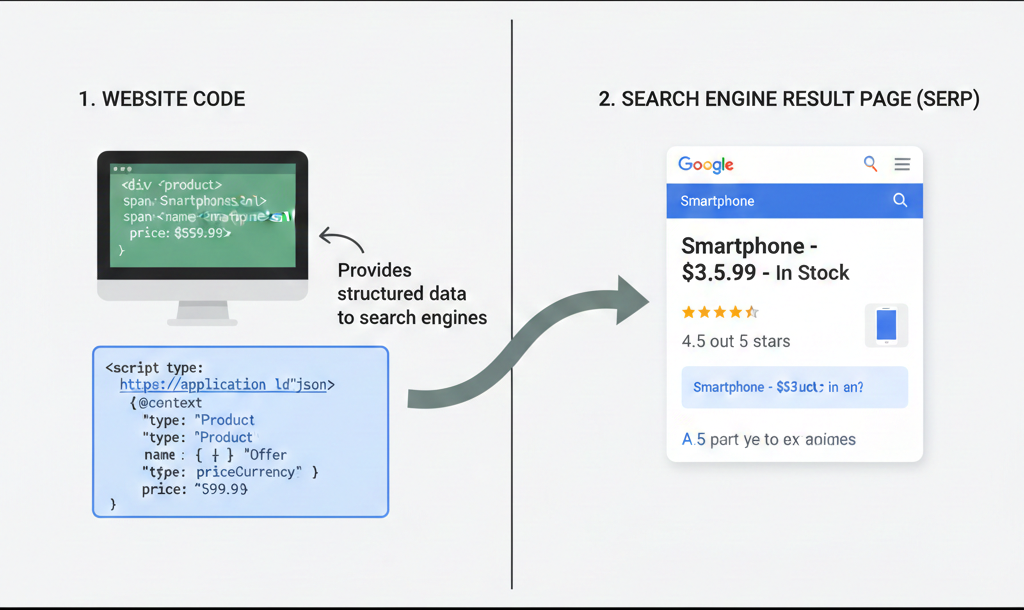
Schema markup is a form of microdata that you add to your website’s HTML to help search engines provide more informative results for users. Think of it as a language that communicates directly with search engines, telling them exactly what your content means rather than forcing them to guess.
When you implement schema markup, you’re essentially providing a detailed description of your content using a standardized vocabulary from Schema.org, a collaborative project founded by Google, Microsoft, Yahoo, and Yandex.
How Does Schema Markup Work?
When you implement schema markup, you’re essentially adding tags to your HTML that create an enhanced description of your content. This allows search engines to understand not just what the words on your page say, but what they actually mean.
For example, if your page mentions “Avatar,” schema markup can clarify whether you’re talking about the movie, a user profile picture, or something else entirely. This contextual understanding is crucial for delivering accurate search results.
The Benefits of Using Schema Markup
Implementing structured data on your website offers several compelling advantages:
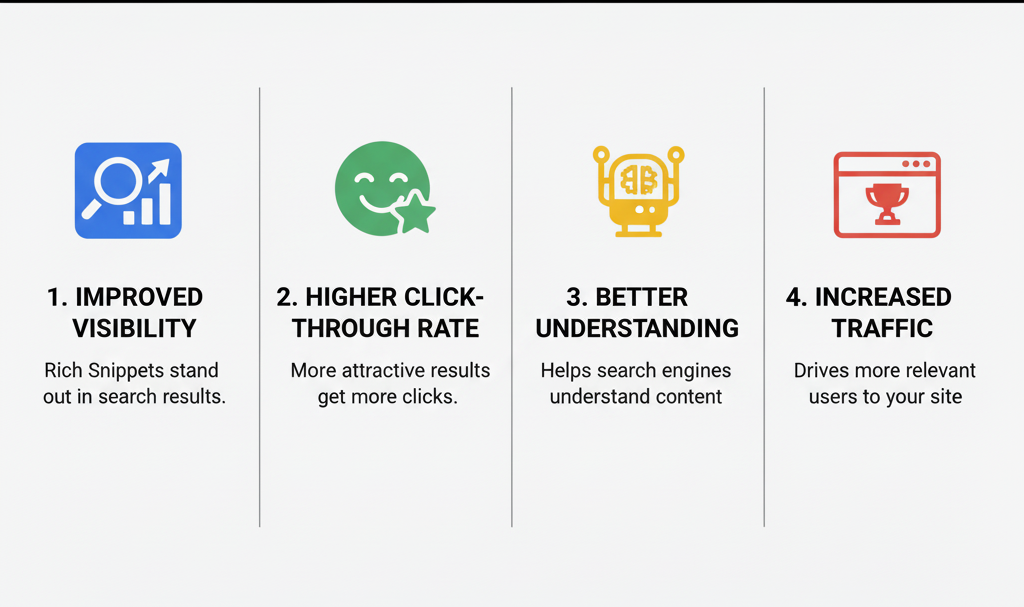
Enhanced Search Visibility: Pages with schema markup can appear with rich snippets in search results, including star ratings, images, pricing information, and more. These eye-catching results typically enjoy higher click-through rates compared to standard listings.
Better Search Engine Understanding: Schema helps search engines comprehend your content’s context, which can lead to improved rankings for relevant queries.
Voice Search Optimization: As voice search grows in popularity, schema markup helps digital assistants like Siri, Alexa, and Google Assistant better understand and retrieve your content.
Featured Snippets: Properly marked-up content has a better chance of appearing in featured snippets or knowledge panels, giving you prime real estate at the top of search results.
The Future of Schema Markup
As search engines become more sophisticated, schema markup will only grow in importance. With the rise of AI-powered search and voice assistants, providing clear, structured information about your content isn’t just beneficial—it’s becoming essential for maintaining visibility in search results.
Why Schema Markup Matters for SEO
While schema markup isn’t a direct ranking factor, it significantly impacts how your content appears in search results, which can dramatically improve your click-through rates and overall visibility.
Enhanced Search Appearance: Schema markup enables rich snippets, those eye-catching search results that include additional information like star ratings, product prices, event dates, or recipe cooking times. These enhanced listings naturally draw more attention than standard blue links.
Better Understanding of Content: Search engines are sophisticated, but they’re not perfect at understanding context. Schema markup removes ambiguity by explicitly defining what each piece of content represents, whether it’s a product, article, local business, or event.
Voice Search Optimization: As voice assistants become more prevalent,structured data helps these systems understand and extract information from your site to answer user queries. Schema markup makes your content more accessible to voice search technologies.
Knowledge Graph Inclusion: Properly implemented schema can help your business or organization appear in Google’s Knowledge Graph, that prominent information box that appears on the right side of search results for branded queries.
Types of Schema Markup That Drive Results
Schema.org offers hundreds of schema types, but certain implementations deliver the most impact for most websites. Here at Classify Skill, we recommend focusing on these high-value schema types:
Article Schema
Helps search engines understand your blog posts and news content, potentially qualifying you for rich results like Top Stories carousels. This schema includes properties for headline, author, publication date, and featured image.
Product Schema
Essential for e-commerce sites, displaying price, availability, and review ratings directly in search results. This transparency helps users make purchasing decisions before even clicking through to your site.
Local Business Schema
Provides critical information for brick-and-mortar businesses, including address, phone number, opening hours, and geographic coordinates. This schema is crucial for appearing in local pack results and Google Maps.
FAQ Schema
Creates an expandable question-and-answer format directly in search results, allowing users to find information without leaving the search page. While this might seem counterproductive, the increased visibility often leads to higher brand recognition and traffic for more complex queries.
Review Schema
Displays star ratings and review counts in search results, significantly improving click-through rates for products, services, and businesses. Users naturally gravitate toward highly-rated options.
Event Schema
Showcases event details including date, time, location, and ticket information, making it easier for people to discover and attend your events.
Course & Educational Schema
For educational platforms, training centers, and online learning websites, Course Schema allows you to mark up courses with detailed information including title, description, provider, duration, cost, and prerequisites. This is particularly valuable for platforms like Classify Skill that offer digital marketing courses and skill development programs.
How to Implement Schema Markup
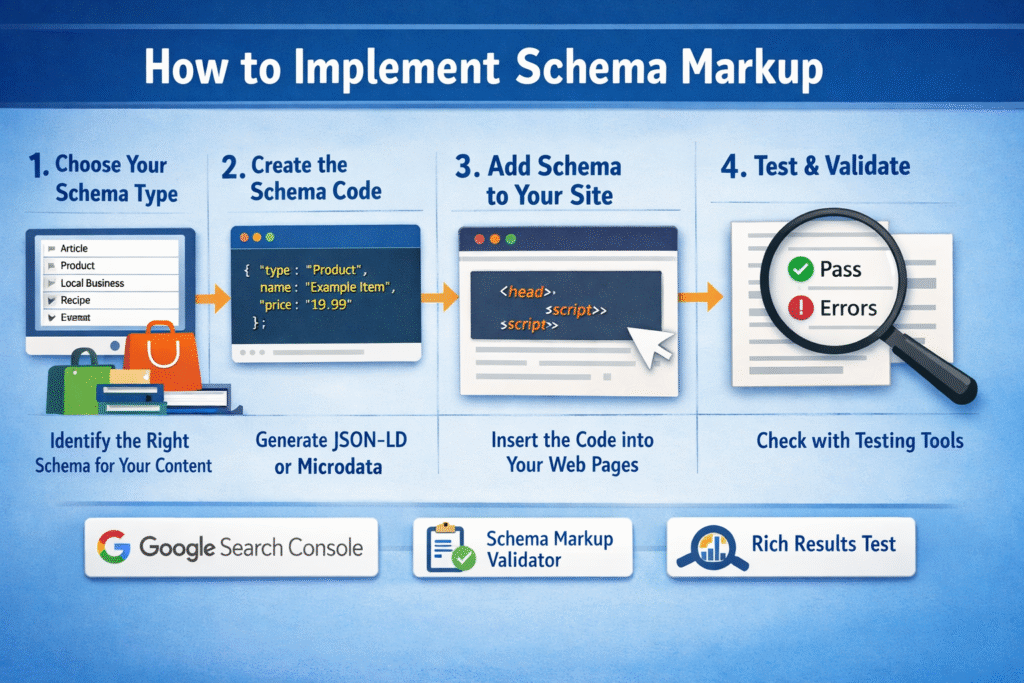
At Classify Skill, we teach practical implementation strategies in our SEO courses. Here are the main methods you can use:
JSON-LD (Recommended)
JSON-LD (JavaScript Object Notation for Linked Data) is Google’s recommended format because it’s clean, easy to implement, and doesn’t clutter your HTML. You add a script tag containing structured data to your page’s head or body.
Example for Article Schema:
“`json
{
“@context”: “https://schema.org”,
“@type”: “Article”,
“headline”: “Schema Markup Guide”,
“author”: {
“@type”: “Organization”,
“name”: “Classify Skill”
},
“datePublished”: “2024-12-20”
}
“`
{
“@context”: “https://schema.org”,
“@type”: “Article”,
“headline”: “Schema Markup Guide”,
“author”: {
“@type”: “Organization”,
“name”: “Classify Skill”
},
“datePublished”: “2024-12-20”
}
“`
WordPress Plugins
Plugins like Yoast SEO, Rank Math, and Schema Pro can automatically generate schema markup for common content types. These tools provide user-friendly interfaces for adding structured data without touching code.
Google Tag Manager
Offers another implementation method that doesn’t require editing your website’s code directly. You can deploy schema markup through GTM’s custom HTML tags.
Manual Implementation
Gives you complete control but requires understanding of schema syntax and structure. This approach is best for developers or those with specific customization needs. We cover this in detail in our advanced technical SEO training at Classify Skill.
Testing and Validating Your Schema
Implementation is only half the battle. You must validate your schema markup to ensure it’s error-free and achieving the desired results.
Google’s Rich Results Test
Google’s Rich Results Test allows you to check if your pages are eligible for rich results in Google Search. Simply enter your URL or paste your code to see how Google interprets your structured data.
Schema Markup Validator
Schema Markup Validator (schema.org’s official tool) checks your markup against the full Schema.org vocabulary, catching errors that might not affect Google results but could impact other search engines or applications.
Google Search Console
Google Search Console’s Enhancement Reports show how your structured data performs in the wild, including which pages have valid markup, errors, or warnings. This tool also tracks your rich result impressions and clicks over time.
Common Schema Markup Mistakes to Avoid
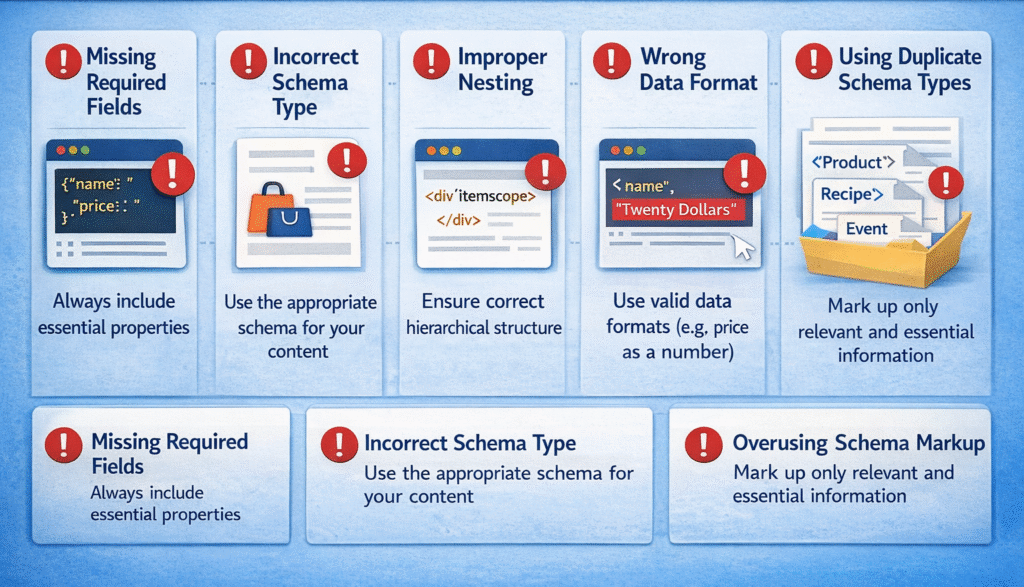
Through our experience training hundreds of students at Classify Skill, we’ve identified these common mistakes:
Marking Up Invisible Content: This violates Google’s guidelines. Don’t add schema for content that users can’t see on the page, as this is considered deceptive.
Using Incorrect Schema Types: Make sure the schema type matches your content accurately. Don’t mark up a service page with product schema just because you want rich results.
Neglecting Required Properties: Each schema type has required properties that must be included for the markup to work correctly.
Inconsistent Information: The structured data should accurately reflect what users see on the page. Mismatches between visible content and schema markup create confusion and may result in penalties.
Measuring Schema Markup Impact
After implementing schema markup, track its performance to quantify the benefits and identify optimization opportunities.
Monitor your click-through rates in Google Search Console, comparing periods before and after schema implementation. Look for pages that gained rich results and measure their performance improvement.
Track impressions for your rich results separately from standard results. An increase in impressions often indicates that your enhanced listings are appearing for more queries or in more prominent positions.
Observe changes in organic traffic patterns. Pages with compelling rich results typically see traffic increases as users find your enhanced listings more appealing than competitors’ standard results.
The Future of Schema Markup

Schema markup continues to evolve as search engines develop new ways to present information. At Classify Skill, we constantly update our digital marketing curriculum to reflect these changes.
Google regularly introduces new rich result types, and early adopters often benefit from increased visibility before these features become commonplace. Keep an eye on Schema.org releases and Google Search Central announcements for new opportunities.
Machine learning and artificial intelligence increasingly rely on structured data to understand and process web content. As these technologies advance, schema markup will become even more critical for ensuring your content is properly understood and surfaced.
Learn More with Classify Skill
Ready to master schema markup and other advanced SEO techniques? At Classify Skill, we offer comprehensive courses covering:
– Technical SEO fundamentals
– Schema markup implementation
– On-page and off-page optimization
– Content marketing strategies
– Local SEO tactics
– E-commerce SEO
Our hands-on training approach ensures you don’t just learn theory but gain practical skills you can apply immediately to improve your website’s search performance.
Getting Started Today
The best time to implement schema markup was when you launched your website. The second best time is today. Start with your most important pages and the schema types most relevant to your content. Even partial implementation delivers value, and you can expand your structured data coverage over time.
Begin by identifying your priority pages—those that drive the most traffic or conversions. Implement relevant schema types for these pages first, validate your markup, and monitor the results. As you become more comfortable with the process, gradually extend schema markup across your entire site.
Schema markup represents one of the highest-impact, lowest-risk SEO opportunities available. While it requires some technical implementation, the potential rewards in visibility, traffic, and user engagement make it an essential component of any modern SEO strategy.
—
About Classify Skill Education: We are a leading digital marketing training institute dedicated to helping professionals and businesses master the latest SEO strategies, social media marketing, and digital advertising techniques. Join our community of learners and take your digital marketing skills to the next level.
Want to learn more about SEO? Explore our other courses and resources at Classify Skill.
, standing out in search results requires more than just quality content and backlinks. Schema markup, also known as structured data, has become an essential tool for helping search engines understand your content better and displaying it more prominently to users.
At Classify Skill Education, we believe in empowering digital marketers and website owners with practical knowledge. This comprehensive guide will help you understand and implement schema markup to boost your search visibility.
Conclusion
Schema markup is a powerful yet often underutilized SEO tool that can significantly improve how your content appears in search engine results. By implementing structured data, you’re not just helping search engines understand your content better—you’re also enhancing the user experience by making your listings more informative and clickable.
Whether you’re running an e-commerce site, a blog, or a local business website, taking the time to implement schema markup can give you a competitive edge in search results. Start small with the schema types most relevant to your content, test thoroughly, and watch as your search presence becomes more robust and engaging.