
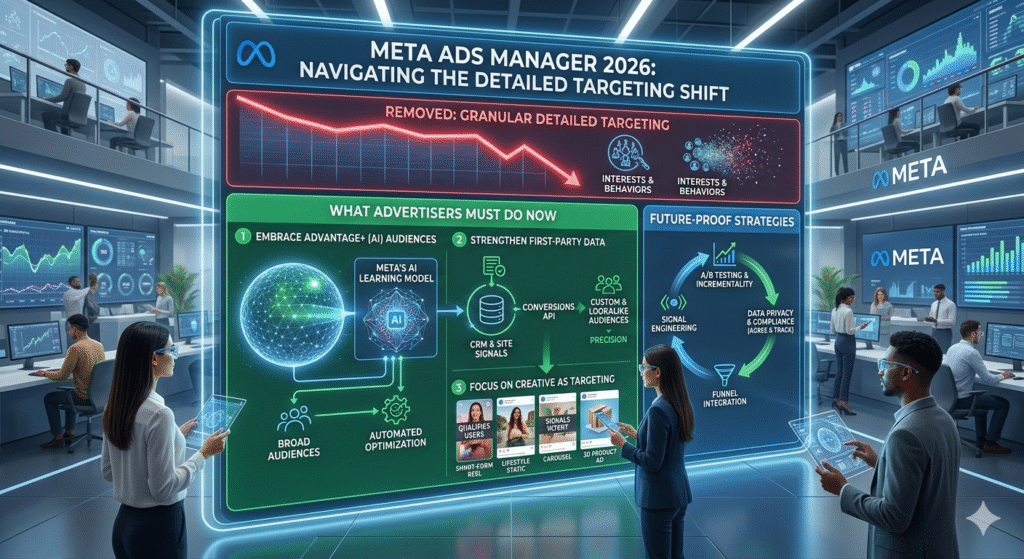
Meta Removes Detailed Targeting Option: What Advertisers Must Do Now in 2026
Imagine waking up one day and finding out that one of your most powerful advertising tools is gone. That’s exactly what happened when Meta removed its Detailed Targeting options for many ad campaigns.
If you run Facebook or Instagram ads, this change hits you directly. Detailed targeting allowed advertisers to reach people based on specific interests, behaviours, and life events like “people interested in yoga” or “small business owners.” Meta has now restricted or completely removed many of these options.
Scared? Don’t be. This blog will walk you through what actually changed, why Meta did this, and most importantly what you should do right now to protect your ad performance.
What Is Meta’s Detailed Targeting and What Changed?
Detailed targeting was Meta’s way of letting advertisers zero in on very specific audiences. You could target people based on:
- Interests (fitness, travel, cooking)
- Behaviours (frequent travellers, online shoppers)
- Life events (newly engaged, new parents)
- Demographics (job titles, education level)
What changed? Meta began removing hundreds of sensitive targeting categories. These include options related to health conditions, religion, political beliefs, sexual orientation, and more. Meta said this was done to protect user privacy and prevent discrimination.
This is not a small update. For many businesses, these were their go-to targeting options.
Why Did Meta Remove These Targeting Options?
Meta has been under pressure from governments and privacy groups for years. Here are the main reasons:
- Privacy laws like GDPR (Europe) and CCPA (USA) are getting stricter
- Apple’s iOS 14+ update already reduced tracking data significantly
- Public backlash against micro-targeting based on sensitive personal data
- Meta wants to move toward AI-based broad targeting instead of manual interest selection
In simple words Meta is shifting from “you tell us who to target” to “let our algorithm find the right people for you.”
How Does This Affect Your Ads?
If you relied heavily on detailed targeting, here’s what you might notice:
- Smaller audience sizes
- Higher cost per result (CPR)
- Lower relevance scores
- Reduced reach for niche campaigns
This is a real problem for small businesses and startups who don’t have large budgets to experiment. That’s why it’s more important than ever to upskill yourself whether that means joining a performance marketing institute in Delhi or taking structured courses locally.
What Advertisers Must Do Now — 7 Practical Steps
1. Switch to Broad Targeting + Strong Creative
Meta’s algorithm is now smarter than ever. Instead of narrowing your audience, give Meta a broad audience and let your ad creative do the targeting.
A scroll-stopping video or image will naturally attract the right people. Focus on making creatives that speak directly to your ideal customer’s pain point.
2. Use Lookalike Audiences
Upload your existing customer list, website visitors, or video viewers. Meta will find people who look and behave like your best customers. This is one of the most powerful tools still available.
3. Build and Use Custom Audiences
- Website visitors (via Meta Pixel)
- App users
- People who engaged with your Instagram or Facebook page
- Email list uploads
Custom audiences are your first-party data and they’re gold in a post-detailed-targeting world.
4. Master the Meta Pixel and Conversions API
If you haven’t set up the Meta Pixel properly, do it today. Better still, set up the Conversions API (CAPI) to send server-side data. This improves tracking accuracy even after iOS privacy changes.
Students at the best Meta ads marketing institute in Uttam Nagar are already being trained on Pixel + CAPI setup as a core skill.
5. Use Advantage+ Campaigns
Meta’s Advantage+ Shopping Campaigns and Advantage+ Audience are built for this new era. They use AI to find buyers across broad audiences. Many advertisers are seeing lower CPAs and better ROAS using these tools.
6. Focus on Retargeting
People who already know your brand are easier to convert. Build retargeting funnels:
- Visited your website but didn’t buy → show them a testimonial ad
- Watched 50% of your video → offer them a discount
- Added to cart but didn’t checkout → use a reminder ad
7. Invest in Learning — Seriously
This change is a wake-up call. The advertisers who adapt fast will win. If you’re in Delhi, this is the perfect time to join an advanced digital marketing training in Dwarka and learn the latest Meta ads strategies from experts who work with live campaigns.
Whether you’re a business owner, freelancer, or marketing professional, hands-on training at a trusted Meta ads training institute in Dwarka Mor will give you skills that no algorithm change can take away.
The Mindset Shift Every Advertiser Needs
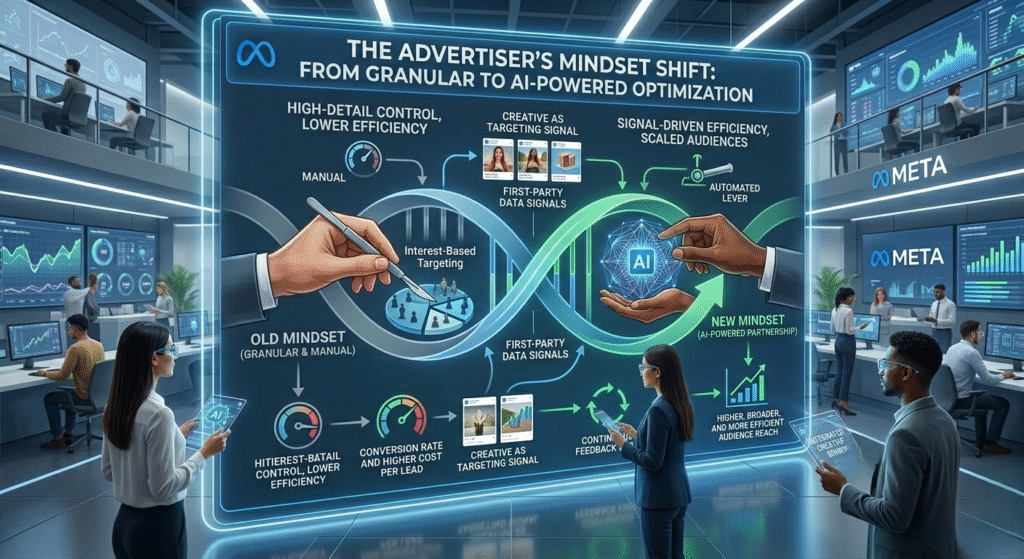
Here’s the honest truth: Meta wants you to trust its algorithm.
The platform is moving away from manual, interest-based targeting toward AI-driven signal-based targeting. Your job as an advertiser is no longer just to set the right audience. Your job is now to
- Feed Meta quality signals (Pixel data, CAPI, customer lists)
- Create compelling creatives that stop the scroll
- Write clear copy that speaks to your audience’s emotions
- Test learn and optimize fast
Conclusion
Meta removing detailed targeting options is not the end of Facebook and Instagram advertising. It’s actually the beginning of a smarter, more creative, and more data-driven era.
The advertisers who will win are those who adapt — by building first-party data, mastering Meta’s AI tools, creating better ad creatives, and continuously learning.
If you’re serious about staying ahead, look for a reliable that teaches real-world skills with live ad accounts. Whether you’re near Dwarka Mor, Uttam Nagar, or anywhere in Delhi, quality training is your best investment right now.
Don’t wait for another update to surprise you. Evolve today.
Frequently Asked Questions (FAQs)
Q1. Did Meta remove all detailed targeting options?
No. Meta removed targeting options related to sensitive categories like health, religion, and politics. Many other interest-based options still exist, but the trend is toward broader, AI-based targeting.
Q2. Will my ad costs go up after this change?
It depends on your strategy. If you adapt by using Lookalike Audiences, Conversions API, and Advantage+ campaigns, costs can remain stable or even improve.
Q3. Is Facebook advertising still worth it in 2025?
Absolutely. Meta platforms (Facebook + Instagram) still reach billions of users. The key is learning the new way to run ads effectively.
Q5. What is the best replacement for detailed targeting?
Lookalike Audiences, Custom Audiences, Meta Advantage+ targeting, and strong creative-led broad targeting are the best alternatives right now.