
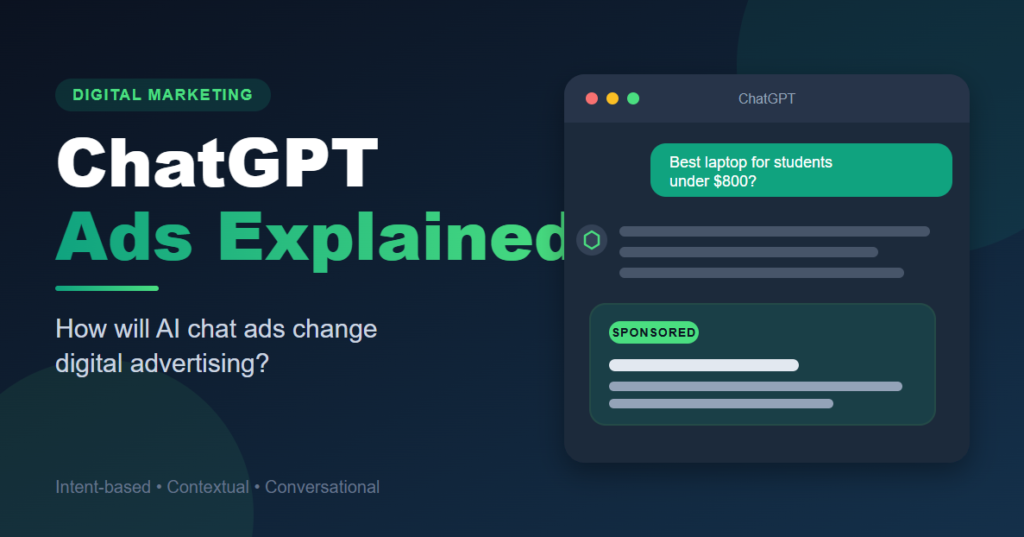
The ChatGPT ads campaign is OpenAI’s program for showing paid ads inside ChatGPT. OpenAI announced on January 16, 2026 that it was testing ads, starting with US users on the Free tier and the $8/month ChatGPT Go tier. The first paid ads went live on February 9, 2026.
Who Sees the Ads?
• Free plan users
• ChatGPT Go users
• Paid tiers like Plus, Team, and Enterprise are excluded, so they stay ad-free.
What Do the Ads Look Like?
The ads appear in clearly labeled “tinted boxes” within or next to the conversation. They are meant to look different from ChatGPT’s actual answers, so users can tell what is paid.
How Do ChatGPT Ads Work?
ChatGPT ads work differently from traditional search ads.
Contextual Targeting
Instead of picking keywords, advertisers choose intent categories and conversational themes. If someone asks about travel plans, a travel brand’s ad might show up.
Privacy Promises
OpenAI says it will not sell user data to third parties or let advertisers see private chat histories. Sam Altman and Fidji Simo have also said ads will not influence the AI’s core answers.
How Advertisers Pay
• On May 5, 2026, OpenAI launched a beta self-serve Ads Manager for US advertisers and added cost-per-click (CPC) bidding alongside the earlier CPM model.
• Ad tech partners include Adobe, Criteo, Kargo, Pacvue, and StackAdapt.
• Early pricing was reportedly high. The February launch was reported at a $60 CPM with a $200,000 minimum. By April, the self-serve minimum had reportedly dropped to $50,000. Treat these as reported estimates, not official OpenAI figures.
How Will ChatGPT Ads Change Digital Advertising?
1. Ads Will Reach People Closer to a Decision
People often ask ChatGPT detailed questions like “Which laptop is best for students?” Users are often further along in their decision-making when ads appear. That makes this ad space valuable.
2. Search Ads May Face New Competition
Google Search has long been the main place people look for answers. If users keep shifting to AI chat, advertising budgets may follow. Brands will likely split their spending between:
• Traditional search ads
• Social media ads
• AI chatbot ads
3. Advertising Becomes Conversational
Ads will no longer be just a link or a banner. They may become part of a helpful, back-and-forth conversation. Brands will need to write ads that feel useful, not pushy.
4. New Opportunities for Small Businesses
The channel moved from a pilot with a high minimum to open self-serve with no minimum spend in under three months, according to one agency briefing. Smaller brands may be able to test it without huge budgets, and early advertisers may face less competition and lower costs while the platform is still new.
5. New Ways to Show Up Without Paying
Brands will also care about being mentioned naturally in AI answers. Expect more focus on clear, helpful, well-structured content that AI tools can understand and trust.
Challenges and Concerns
ChatGPT ads are promising, but they are not risk-free.
• Trust: People use ChatGPT for honest answers, so ads must never feel like they are shaping the response. Altman himself has said he likes that people know their answers are not influenced by advertisers.
• Limited measurement: Attribution is still immature and results are unproven at scale.
• Limited reach: The product is mostly US-focused, and many advertisers outside the US or with smaller budgets have had to use third-party networks.
• Rival caution: Perplexity walked away from ads over trust concerns.
Tips for Brands Getting Started
• Start with a small test budget.
• Focus on high-intent topics tied to your product.
• Write helpful, honest ad copy.
• Track conversions carefully.
• Keep your Google and Meta campaigns running while you experiment.
Frequently Asked Questions (FAQs)
1.What is the ChatGPT ads campaign?
It is OpenAI’s program to show paid ads inside ChatGPT. OpenAI confirmed on January 16, 2026 that ChatGPT was entering paid advertising. The ads are labeled so users can tell them apart from normal answers.
When did ChatGPT ads start?
The first paid ads shipped on February 9, 2026. The rollout happened in steps, not all at once.
2. Who can see ChatGPT ads?
The launch is limited to Free and ChatGPT Go users, and it excludes Plus, Team, and Enterprise subscribers. The ads were first tested with US users.
3. Will ads change ChatGPT’s answers?
OpenAI says no. CEO Sam Altman and Fidji Simo have both said ads will not influence the AI’s core answers. Ads are shown separately from the response.
4. Does OpenAI sell my data to advertisers?
OpenAI says it will not sell user data to third parties or let advertisers see private chat histories. Check OpenAI’s help center for the latest privacy details.
5. How do advertisers buy ChatGPT ads?
On May 5, 2026, OpenAI announced a beta self-serve Ads Manager for US advertisers and added CPC bidding alongside the CPM model. Advertisers can also work through partners like Criteo, StackAdapt, and Adobe.
6. How much do ChatGPT ads cost?
OpenAI has not confirmed official prices. Reports mention a launch CPM of around $60, but these are estimates, not OpenAI-confirmed numbers. Minimum spends have also reportedly dropped since launch.
7. Can small businesses advertise on ChatGPT?
It is getting easier. One agency briefing says the platform moved from a $200K enterprise pilot to open self-serve with no minimum spend in under three months of 2026. Still, it is best to start with a small test budget.
8. Can I advertise on ChatGPT from India?
Right now the product is mostly US-focused, so direct access may be limited. Advertisers outside the US can sometimes reach ChatGPT-style users through independent AI ad networks. Keep an eye on OpenAI’s announcements for new countries.
9. Will ChatGPT ads replace Google Ads?
Not soon. Experts suggest treating ChatGPT ads as a small experimental line, not a Meta replacement, because measurement is still immature. Most brands will use ChatGPT ads along with Google and social ads.
Conclusion
The ChatGPT ads campaign marks a big shift in how brands reach customers. By placing ads inside helpful conversations, OpenAI is creating a new kind of advertising built around intent and context. It is still early, and trust, measurement, and pricing are open questions. But brands that learn how it works now may gain an advantage as AI chat becomes part of daily life.
Keep in mind: This space is changing quickly, so check OpenAI’s official announcements for the latest details on pricing, formats, and availability.